Play Day
7/31/23

Play Day
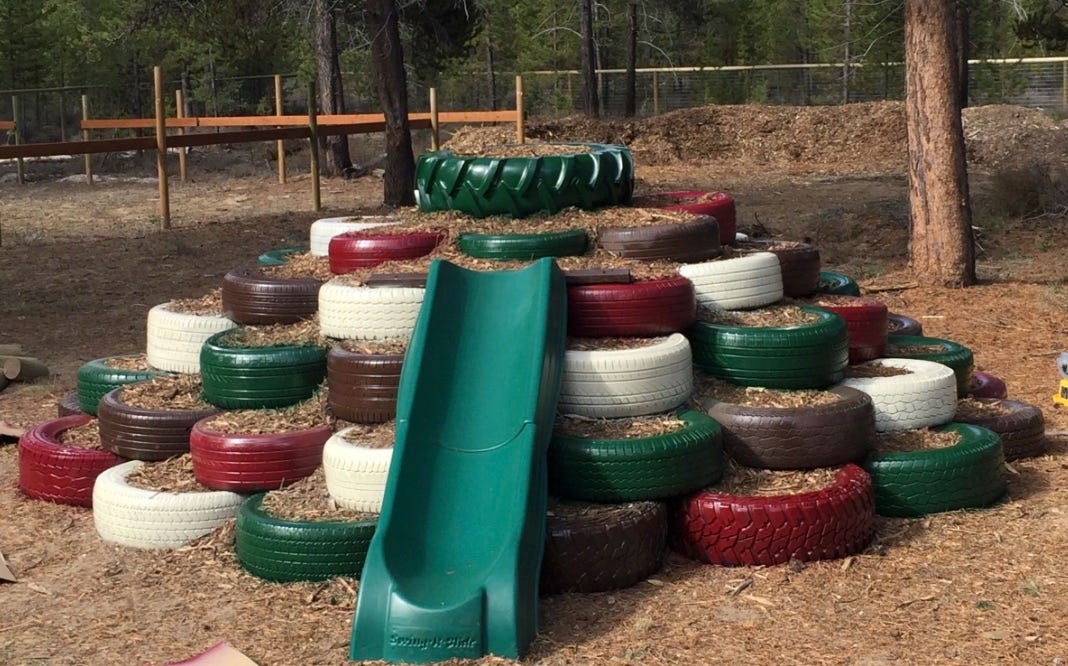

To be clear: this blogger has no children and hasn’t raised any, which is rather liberating. Not having direct experience with something frees us to comment on the subject matter without restraint, injecting useful advice into anyone else’s life at the drop of a hat, and with the type of confidence and authority that accumulates when we don’t know what we’re talking about. Lack of direct personal experience imparts a great confidence and certainty that can only arise when left unopposed by reality.
That much clarified, permit me to observe that you parents out there have done it all wrong. You were supposed to let your children play more. But you didn’t, did you? You insisted your kids avoid the perils of the outdoors, ranging from Lyme disease to sketchy adults and—horrors!—lack of adult supervision. If you’d only asked me about what to do ahead of time.
But if you wouldn’t listen to me, then at least listen to psychologist Jonathan Haidt and psychology professor Peter Gray, both of whom have been studying what’s wrong with kids these days.
Humans, like other mammals, appear to require play during their early years to develop healthy minds as adults. These researchers and others like them have concluded that modern society and the parenting it encourages are robbing youngsters of opportunities for play. By “play”, they mean specifically play among the children’s peers, where kids gain several important skills. Peter Gray summarizes the general research findings in a guest essay for Jonathan Haidt’s After Babel Substack, titled “Play Deprivation Is A Major Cause of the Teen Mental Health Crisis”, where he says:
Dozens of research studies, conducted with people of a wide range of ages, have led to the conclusion that mental health for all of us depends on our ability to satisfy three basic psychological needs—the needs for autonomy, competence, and relatedness. The logic underlying this is straightforward. To feel in charge of our life, to feel we can meet the bumps in the roads of life with equanimity, we must feel free to choose our own paths (autonomy); feel sufficiently skilled to pursue those paths (competence); and have friends and colleagues for support, including emotional support (relatedness).
Lack of these play experiences leads to reduced happiness later in life, the research says. But read the whole thing. Or watch the TEDx talk Haidt also recommends as capturing the scale and scope of the problem:
For my part, I was concerned that Gray would wind up making the 1950s of his childhood into a perfect past, where ideal kids from ideal families had the best play experiences—after which everything has since gone down the tubes. Needless to say, the era was far from ideal for everyone. But it does appear to have been less filled with hovering parents fearful that their offspring will miss out on moments of adult-structured play or scientifically designed learning—or else they will wind up victimized by menacing strangers from the seedier fringes of Adult World.
At any rate, the described idyl of hunter-gatherer societies (mentioned in the TED Talk) is a very long way off from where we are today. In those “primitive” societies, they let the kids play all day long without adult supervision. Many a modern parent will certainly find appeal in the very thought.
Good morning. I don't need experts to tell me I did it wrong: I have my kids.
Today's special animal friend is Pallas's cat, Otocolobus manul. "Manul" is a common name for this species, which is also known as the "steppe cat." Pallas's cat is one of the world's smaller wild cats, growing up to two feet in body length, with a one-foot tail, and about a foot high; an adult weighs between five and ten lbs. They are found in Central Asia, as far west as the Caspian Sea, east into China, with the highest population in Russia and Mongolia. South of the Tibetan Plateau, they are found in Afghanistan and Pakistan. They prefer altitudes below 5,000 feet with no more than a few inches of snow.
https://www.youtube.com/watch?v=kgrV3_g9rYY&t=10s
Pallas's cat looks larger than it is because of its very thick coat. They have a fine, very dense undercoat with guard hairs up to three inches long. They can have 58,000 hairs per square inch. (Humans have about 1,000.) Pallas's cat seems even more offended than most cats because its ears are set unusually low on the sides of its skull. This feature helps the cat remain hidden when stalking prey. It can look over or around an obstacle without its ears showing, while maintaining its full range of hearing.
https://www.youtube.com/watch?v=Sg8FMNEt8KY
These are solitary animals with a low population density. Each one will have several dens, sometimes with multiple entrances, in its home range. They make dens in caves, rock crevices, and marmot burrows. They probably ate the marmots, since they are voracious predators of small rodents and lagomorphs. A common hunting strategy is to ambush the prey as it leaves its den, but they will also reach into holes to extract the prey. They also eat some birds and insects.
Because Pallas's cat is difficult to observe in the wild, not much is known about their mating behavior. Mating season seems to be late fall/early winter, and two to six kittens are born in April or May. They are mature and able to hunt for themselves after six or seven months, and they begin breeding after a year. Up to two thirds of kittens do not survive long enough to reproduce in the wild ... as far as researchers can tell. It is very hard to study this species!
https://www.youtube.com/watch?v=BKanXAV-yUU
The conservation status of Pallas's cat is muddled. IUCN lists it as "least concern" because of its very broad range, but China considers it Endangered and Turkmenistan says Critically Endangered. It is hunted for fur and "medicine," even though this is illegal. Other threats include predation by domestic and feral dogs, habitat disruption because of mining and infrastructure, and the loss of prey populations. In Mongolia, poison is used on the grasslands to kill rodents, which burrow, causing subsidence, and eat roots, killing grass. This is very bad for raptors and terrestrial predators.
Pallas's cat is a high priority for captive breeding programs in Europe, North America, and Japan. However, infant mortality is high, up to 50%, and keeping adults alive is also difficult. We need to learn much more about Pallas's cat to assist in its long-term survival.
https://www.youtube.com/watch?v=AzK6NFoBPXs