Consumer Culture Shock
Monday, November 25, 2024

Consumer Culture Shock
[MarqueG note: Thanks to Kurt for this guest post, reporting from his trip to China.]
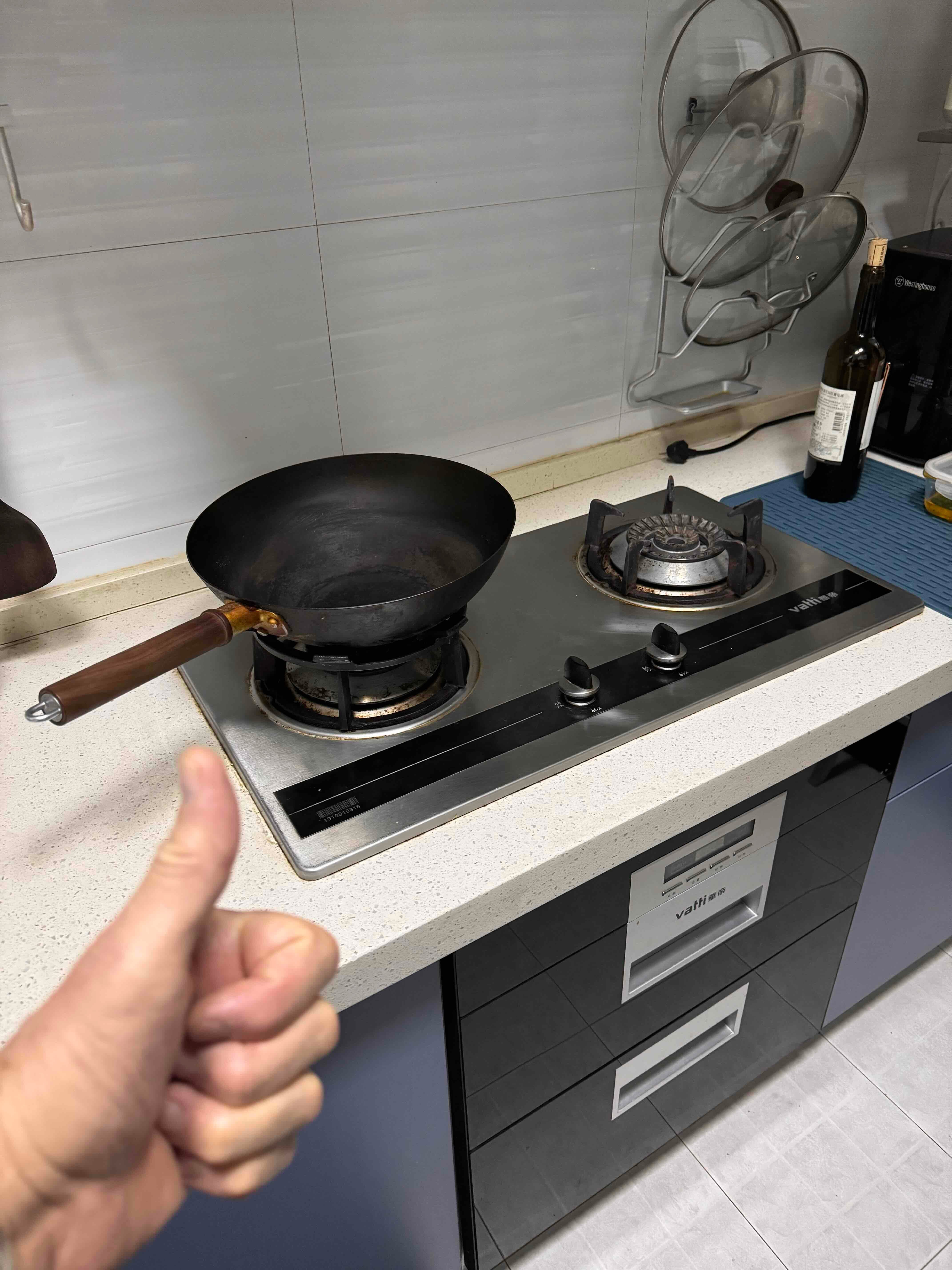
Wife Wu wants a new wok…guo in Mandarin. We make our way to the local Superstore, and find a sales representative. I’m confident in trying out my Mandarin. The greeter asks us how she can help. I begin…
“Guo. Wo yao guo. (I want guo.) Wo yao guo.
Guo?
Guo.
You want to cross bridge?
No, like cooking pan, Guo.
What country? America?
Cook, round pan, cook food, Guo.
Where is the bridge? You are leaving across bridge?
Guo. Guo. Guo.
Guo wei?
Shide (yes), Guo.
Oh, I understand, country. You are Meiguo (American).
No, cooking pan! Guo. Guo.
(Making cooking actions, forming round circle with fingers in air, make eating actions)
Guo. Guo. Guo.
Puzzled look......Guo wei?
Guo. Guo!!
Ohhhhhhh, you mean Guo! I get it! Guo.”
The preceding is a very short introduction to using tone when speaking, or trying to understand, Chinese. Romanized Chinese words use a system called Pinyin, an amazing phonetically derived manner to write the sounds of Chinese in Western alphabet form.
The phonetic sounds in Pinyin are not necessarily the same as Western sounds. For example, “qu” is sounded out as “tre”, and “c” is sounded out like “ts”. Pinyin is a remarkably complete and logical manner for us Westerners to begin understanding Mandarin, but understand, you cannot use Pinyin to communicate to Chinese because one must also understand characters, each having it’s own sound, with several characters having the same sound but different meanings, i.e., the dread homonym, bane of all language learners. A side track into Pinyin is fascinating for anyone wishing to know more, but I digress….
Sounds barely discernible to the Western ear can make words mean entirely different things, and these sounds are the tones one applies to specific syllables. Mandarin only has (approximately) 400 syllables, whereas English has over 4000 (I’ll let the linguists argue about specific numbers, I’m only creating context).
Tones are the way one drags a lot of mileage out of a very few syllables. There are 4 tones (actually more, but I’m keeping this simple)…… In Pinyin, tones are shown as follows, with the markers placed over the last letter to indicate tone….
1st tone is flat, indicated by ¯
2nd tone is up, indicated by ´
3rd tone is down, then up, indicated by ˘
4th tone is down, indicated by `
So.......there is....
Guō = cooking Wok, the center of cooking efforts in a Chinese kitchen.
Guó = country.....Meiguo is America, Zhongguo is China, etc.
Guŏ = fruit…example “shuiguŏ” meaning wet, watery fruit (shui is water)
And.....
Guò = cross a bridge, go from here to somewhere else, and a few more things.…
Now you know why the woman was asking me about bridges and countries.
Placing emphasis on a word in Chinese without considering it’s tonal implications means no one knows what the hell you are saying. One might say something indistinguishable to Western ears that means something entirely different than one’s intent.
So, armed with my tonal knowledge, we decamp to Walmart and my descent into non-understanding.
I confidently ask “Guo wei.” (Where are the woks?) Puzzled looks. “Guo. Guo wei.” (No question mark.... wei is attached to signify a question....sort of…one of a number of “indicators” in Mandarin…again with the digressions…)
Guo? I wave off, Ms. Wu says Guō, we are directed to the rear of the store.
A wall of guō, turning the corner into 2 walls of guō. A third wall of accessory guō. I had no idea. Following the form of Walmart greeters, 2 salespeople descend to help us with our choice. We are directed away from the cheaper to the more expensive (or course), but this is why we are at the Superstore in the first place. Anyone can go into any neighborhood market and get a basic guō for a couple bucks. Ms. Wu, being a modern Chinese woman, hankers for Calphalon, or similarly modern quality.
I choose the one I’m directed to and…I am a rank amateur. Wu is like...sheeesh.... Wu inserts herself in the negotiation and starts applying the squeeze to the sales rep....tell us why we should buy. Experienced, the salesperson launches into the detailed sales rap.
We are led through the maze of explanations...thickness means “fumeless” (no smoke), rivet size, durability.....a crowd of elderly Chinese women forms, transfixed by the foreigner trying to speak their language.
I’m a technician, and was swept up in the moment by technical considerations. I extemporize to Wu about plies, the thermodynamic benefits of the copper inner layer, the beauty of stainless outer plies for ease of maintenance, how fumeless isn’t just about smoke, but how modern science knows that cooking oils heated to excess actually create toxic and harmful......Wu is with it until I get to thermodynamics, damn my overly technical approach to simple things.....I’m losing my audience....too much, too soon. I make mental notes for the time I may be doing infomercials on CCTV, turn the floor back to Wu.
Wu squeezes harder. What do we get if we choose this guō? Sales in China are normally accompanied with a gift to grease the way. A wooden spatula is proffered. Sure, what else? Attendants (now numbering 4) dismantle entire displays of guō to get at buried gifts. A glass chafing dish. Not bad, what else? Two glass chafing dishes. Boxes are opened, Ms. Wu inspecting chafing dishes to a degree normally found in examining fine diamonds, a minute tiny defect is discovered in one of the glass surfaces.
Not good enough. With absolutely no urging on our part, a dozen chafing dish boxes are opened, examined, boxes and wrapping paper are everywhere, a small crowd of elderly has been growing and they lean on their shopping carts, settling in to appreciate how the foreigner buys a guō in the modern world.
Finally, we have two chafing dishes that might pass muster in a Swarovski shop, a moments hesitation from Wu, the sales team rallies and the closer is presented…a glass oil container to complement the guō.
Deal.
In less time than it takes to type this sentence, all materials are back in boxes, hidden away again, all attendants vanish.
There is a particular talent I’m beginning to appreciate of the nature of Chinese crowd dispersement. Now they’re here, now....where did everybody go? Even our elderly audience has evaporated, no trace, no lingering...poof, we’re standing alone in the aisle. From there, an uneventful payment and exit, a walk to the apartment.
Lunch with the new guō indicates better than imagined performance, Wu repeatedly returning to the kitchen to heft, examine, admire, and feel satisfied with the choice. When one grows up in the village, something like a new fancy guo with a brand name isn’t any old thing. It’s a step into the future they imagined and dreamed of.
I am reminded of a friend’s observation several years ago about how China is 1950’s America. Suddenly, there is bounty everywhere, choices, options, a dizzying array of possibilities to be considered in shining new temples of abundance.
All one has to do is know how to proceed. Wu is ascendant in the knowledge she bettered her silly husband in competent consumption. Me? I’m on the eternal hamster wheel, learning.
 | A guest post by
|
Today’s special animal is the black rhinoceros, Diceros bicornis, a critically endangered pachyderm. Pachyderms are an obsolete order of thick-skinned, nonruminant ungulates; the Order Pachydermata included elephants, hippos, rhinos, and tapirs. We now know that rhinos and tapirs (and horses) are in the Order Perissodactyla, while elephants are all alone in the Order Proboscidea. This will be on the test.
An adult black rhino is about 6 feet high at the shoulder and is 9 to 12 feet in length. They commonly weigh over 3,000 lbs. and sometimes weigh over 6,000 lbs.
https://www.youtube.com/watch?v=KhVlkc1yGwM
Black rhinos eat leafy plants, twigs, branches, shoots, thorny wood bushes, small trees, legumes, fruit, and grass. Their ideal habitat is shrubby and scrubby, with a few trees to provide shade, and they favor woody plants over grass. This makes them more difficult to keep in captivity than grazing animals. Nonetheless, they are successfully kept and bred in many zoos around the world.
https://www.youtube.com/watch?v=CzujuYbSHHo
Black rhinos have two horns. The rear (or higher on the head) horn is conical and can be 22 inches long. The front horn is curved and can be up to 55 inches long. The horns are made of keratin, like your fingernails. They grow throughout the animal’s life, and each one provides a “fingerprint” of the individual based on its diet and other environmental factors.
https://www.youtube.com/watch?v=APFhlJH1SUI
Black rhinos were nearly eradicated by hunters in the 19th and early 20th centuries. From a low of around 2,500 individuals, the population has increased to over 6,000. Poaching is still a threat; the main economic driver is the demand for horns for “traditional medicine.” One measure used to protect the rhinos is tranquilizing them and cutting off the horn with a chainsaw.
Black rhinos are very aggressive. They will charge anything that moves and some things that don’t, such as trees and termite mounds. Although adults are rarely killed by other wild animals, intra-species mortality is high, with 50% of males and 30% of females killed by their own kind.
https://www.youtube.com/watch?v=nWVL4xuuE6M
The belief that rhinos’ eyesight is unusually poor has been shown to be inaccurate. Their eyesight is okay, while their hearing and sense of smell are excellent. Another belief that is being challenged is the mutualistic symbiosis of oxpecker birds and cattle egrets with pachyderms. Recent studies suggest that the attention of oxpeckers is a net negative for rhinos, keeping wounds from healing and increasing blood loss.
https://www.youtube.com/watch?v=rtULCsX_H9o
I like your guo, although I don't want one for myself. We have a wok that gets used a few times a year, usually when Thor shows up with the urge to stir-fry.
Good article, very involving descriptions, I could really see the scene.