5/8/23
Investment Tip

Investment Tip
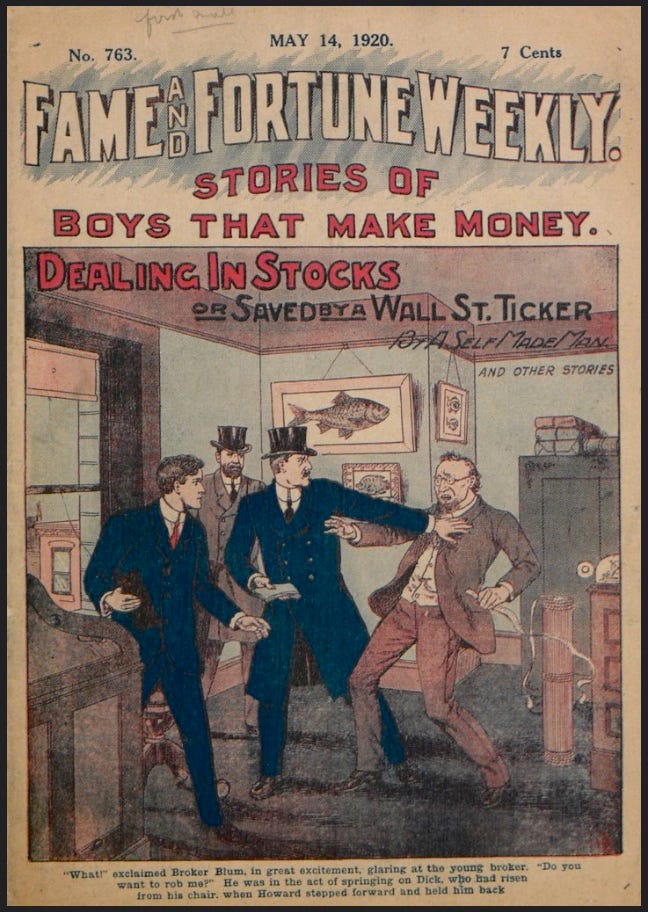
My advice for investors is to be smart and predict the future—but do it accurately! Apparently, random guesses are more likely to lose than win. What you need to do is simple: pick the winners from among the rest.
Silliness aside, it does appear that even the smartest, best trained investment gurus are more wrong than right in assessing where to put their money. Morgan Housel, blogging at Collab Fund, says that your run-of-the-mill venture capitalist who makes 100 investments will get most of their returns from two of them, and almost all from five of them. The other 95 will flounder or lose money.
You might think that most profits come from the middle of the pack on a normal bell curve of all companies. But instead it comes from a rare few at the skinny, right-hand tail of the curve. The short blog from Housel gives illustrative examples from stock markets and companies, because the same phenomenon is observed within successful corporations themselves.
Amazon drove 6.1% of the S&P 500’s returns last year. And Amazon’s growth is almost entirely due to Prime and AWS, which itself are tail events inside a company that has experimented with hundreds of products, from the Fire Phone to travel agencies.
Apple was responsible for almost 7% of the index’s returns. And it is driven overwhelmingly by the iPhone, which in the world of tech products is as tail-y as tails get.
This sounds familiar. Movie studios have famously lost money on many more films than earn money—and just one or two hits are what keep the studios alive. Book publishing is known to work much the same: a couple hit writers keep the companies afloat while they gamble and lose on hundreds of other authors. It is also found in the pharmaceutical industry: they pour tons of money developing drugs that flop, while a single runaway success keeps the bankruptcy courts at bay.
So how would you pick winners if you wanted to become an investment guru? By trying to guess right mainly. And figuring that out often means getting in line behind everyone else who thinks they’ve guessed right, in large part by noticing where the most influential, most respected figures have formed a queue. The only problem, of course, is that sometimes the smartest and most revered investors line up behind a flop and lose their shirts. At least having a shirt was fun while it lasted.
Today's special animal friend is the Numbat, Myrmecobius fasciatus. You say it "noom-bat." The numbat, a marsupial, lives in Western Australia, where it eats termites. With a couple of other extant carnivorous marsupials, the numbat is related to the extinct (?) "Tasmanian tiger," the thylacine. The two animals have similar coloration, being brown-furred with distinct white bands arching over their back and hindquarters. However, the thylacine was (is?) built more like a dog, while the numbat is built more like a squirrel.
https://www.youtube.com/watch?v=lrxD27Yyl-c
Numbats are classified as Endangered by IUCN and Adorable by Google. Being ant-eating animals, numbats have elongated snouts and very long, sticky tongues. They also have a cute, long, fluffy tail. They are diurnal, coordinating their active periods with the activity of termites. This varies according to seasonal temperatures. They live in woodland and semi-arid shrub habitats.
Once found widely across Australia, numbats are now endangered, found only in a few areas where, it is believed, an abundance of hollow logs helped to protect them from introduced predators, especially the red fox and feral cats. Numbats are also eaten by native birds of prey such as the little eagle.
https://www.youtube.com/watch?v=s1d-kGgFv40
Numbats breed in late summer, February/March. Litters of four babies are born after 15 days' gestation. Unlike most marsupials, females do not have a pouch. Protective folds of skin protect the miniscule infants attached to the teats. By late July or early August, the babies are about 3" long, and they can detach, crawling onto the mother's back. They are independent by November.
The babies are even more adorable than the adults:
https://www.youtube.com/watch?v=d1U-Us7WWwg
https://www.youtube.com/watch?v=7m70-iVfbKQ
The population, which had dropped below 1,000 individuals in the 1970s, is increasing as Australian authorities work to reduce invasive predators. The Perth Zoo has a successful breeding program. Project Numbat is a major conservation organization. You can get calendars, t-shirts, and numbat tchotchkes:
http://www.numbat.org.au/
Good morning. Buy index funds!