5/5/23
Elected Dictator

Elected Dictator
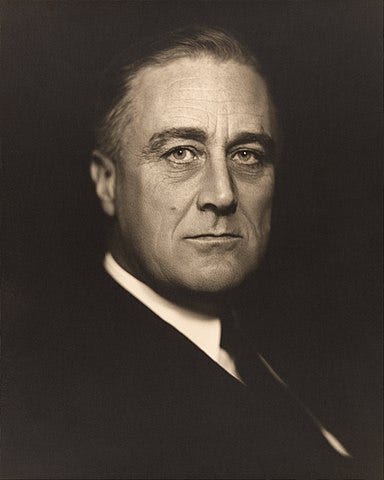

What if Americans popularly elected a dictator and no one worried? Granted: it can feel like you’re living under a dictator when the other team’s guy is in charge—especially if you are devoted to a political team. That always struck me as an adequate simplification, even if not satisfying: dictatorship in the American context is in the eye of the beholder. The observation expresses the feeling of unfairness that others are in power and doing things the people disapprove of—“the people” as a stand-in for the person speaking.
At Discourse Magazine, Timothy Sandefur reviews a recent book in the genre of denunciations of Trump/MAGA, an effort to which I am not at all hostile. The lament is familiar: not only was Trump an illegitimate populist, but he heralded the fascistic, authoritarian end of democracy in America, coming about any day now. The reviewed book is Democracy Unmoored by Samuel Issacharoff (2023).
The book examines populist authoritarianism, tracing it back as far as 1945. Sandefur points out that there is no obvious reason to limit the search there, since Franklin D. Roosevelt was himself arguably a populist authoritarian: he broke the two-term tradition and effectively made himself president for life; he set up lawmaking federal agencies by executive decree and appointed their members; he exceeded his constitutional constraints arguing the document was a needlessly restrictive relic of the horse-and-buggy era. The story sounds familiar enough.
Setting aside the identity of America’s first populist authoritarian, Sandefur points out that the populist’s appeal derives from a failure of elected government to safeguard humble law-abiding citizens against the breakdown in civic order:
[Take, for instance] the nationwide riots of 2020, which helped set the stage for the Jan. 6, 2021, assault on the Capitol Building. In virtually none of his long passages on the breakdown of what he calls “government delivery of social goods” does [Issacharoff] focus on simple law enforcement. Yet history reveals that fascism grows in proportion to government’s failure to protect citizens from theft and assault. Whether it be the Brownshirts of Weimar or the Black Panthers in Oakland, such movements typically start as vigilante groups, gaining popular support by appearing as protectors of the public.
The failure, or refusal, of local officials to take action against riots in Minnesota, Portland, Seattle, Wisconsin, etc.—or even such precursors as the violent protests on Inauguration Day 2017, or the storming of the Capitol during Brett Kavanaugh’s confirmation hearings—certainly lent credence to populist claims that democratic institutions had broken down and that only a populist strongman could restore justice.
This sounds familiar, too.
Historically, the stock market crash and deep recession during the Hoover administration (1929—1933) might also have represented the breakdown in civic order that fueled FDR’s populist campaign at a time when the southern populist demagogue Huey Long was also considered an alternative. Populists like Long and Roosevelt claimed that they could personally fix such things by force of will and personality, if necessary by setting aside the niceties of America’s traditional governance and the constitutional order. They alone could fix it, we might say.
The fixes since Roosevelt have involved taking power from elected officials and handing it over to the administrative state, where no one can be voted out of office. Over time, this lack of accountability frustrates citizens. Frustrated citizens are more likely to succumb to the appeal of demagogues promising to clean out the Augean stables, drain the swamps, and so on. The elected officials in lower offices don’t matter all that much, after all, since they don’t have any areas of decision making.
It is the office of the presidency that has become to big and powerful, it seems to me. The concentrated power attracts Dark Triad personality types, who are the hardest to constrain at all.
As a birthday bonus, some music for commenter BikerChick:
Happy LX!
Today's special animal friend is the Great Bustard, Otis tarda. The largest populations of this big, ground-nesting bird are found in Spain and Portugal. Others live in southern and eastern Europe, Morocco, and parts of Asia. Europe hosts year-round residents, while the Asian species migrate south in winter. They live in native or cultivated grasslands, parks, and agricultural fields.
The male great bustard is about the heaviest flying animal on earth. (The other contender is the male Kori bustard, Ardeotis kori.) The heaviest verified great bustard, collected in Manchuria, weighed 46 lbs. A Spanish individual weighed 42 lbs. However, 20 to 30 lbs. is much more common. They are over three feet long with a wingspan that may exceed 8 feet. Females are about 1/3 smaller in length but weigh, on average, 9 to 12 lbs. Both sexes are brown on top and white underneath.
Bustards are omnivorous, eating grasses and other plants, seeds, and insects in different proportions depending on availability. Giant bustards mate around March. During the winter, males fight for status, with the highest-ranked having the best access to the lek or display area, where they strut and fluff:
https://www.youtube.com/watch?v=EFESzLAXPbQ
https://www.youtube.com/watch?v=EYLVZ8tFFOI
They really do have lovely feathers. A successful male may mate with up to five hens in a season. The ladies make not much of a nest, just a depression scraped in the ground, but they select a secluded location in thick vegetation, with plenty of sun, out of danger from flooding. Eggs are large, over 3 inches long and 2 inches high. There may be up to 3 eggs; 2 is typical. The female incubates them for 3 to 4 weeks. The chicks are precocial and able to leave the nest shortly after hatching. They can fly in about three months, but stay near their mother for up to a year.
https://www.youtube.com/watch?v=fLT7-sPltus
It is estimated that mortality in the first year is about 80%. Predators of eggs and young include raptors, corvids, boars, foxes, weasels, lynxes, badgers, martens, and more. A lot of hungry animals are interested in a large, ground-dwelling bird. Eagles and the Eurasian eagle-owl are predators of adults. Human-related threats include habitat loss and pollution, predation from dogs, and impacts with power lines and vehicles. The great bustard is classed as Vulnerable by IUCN.
Once native to England, the great bustard was eradicated by hunters by the 1840s. In 2004, The Great Bustard Group brought eggs from Russia in an effort to reintroduce the species. A British Army facility on Salisbury Plain hosts the project. In this protected area, the population has grown to over 40 individuals. They have a lot of videos and darling little accents:
https://www.youtube.com/watch?v=9EbITuw95Oc
https://www.youtube.com/watch?v=yG-7sKw_H2g
"The fixes since Roosevelt have involved taking power from elected officials and handing it over to the administrative state, where no one can be voted out of office."
And yet, those who most strongly support this process perceive themselves as the defenders of "democracy."