5/24/23
Bus Stoppage

Bus Stoppage
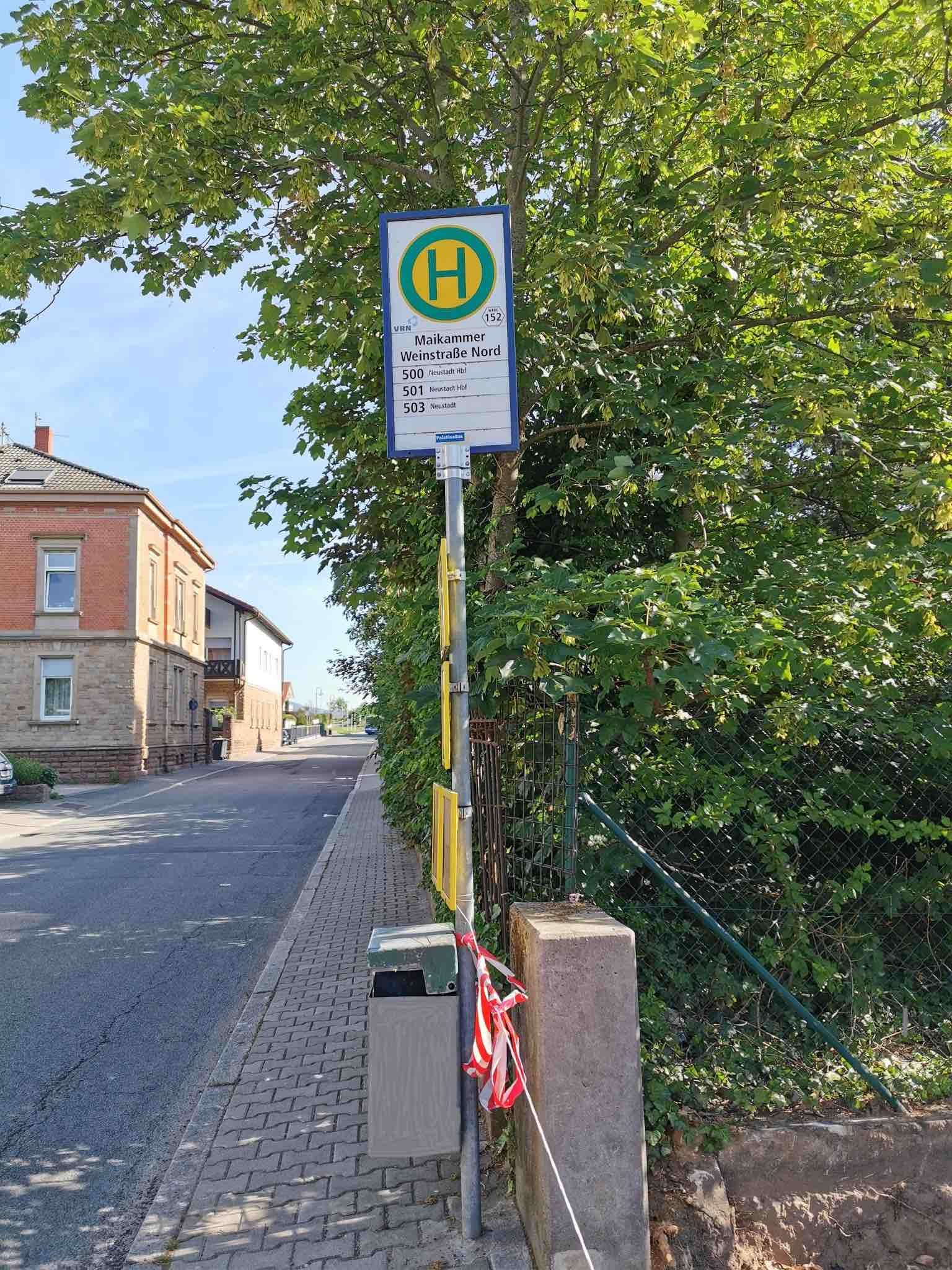
In most of the world, the cheapest, most cost-effective form of urban mass transit is the network of passenger buses. In some countries these are run on fares with a heavy dose of taxpayer funds. In others there are informal networks of privately owned vans, minivans, and similar vehicles that make a modest profit for their operators.
Drawing on his international experiences, Chris Arnade had an inspired rant about the subject on his Substack the other day, titled “Why the US can’t have nice things”. He looked at bus stops in Los Angeles, California, analyzing their most recent design for small, uniform bus stops. These offer neither shade nor seating for users, but instead an overly expensive lamp post with some ornamental steel grids painted turquoise. They are about as pointless as they are basic. Chris uses them as a springboard for a rant about the unique American form of public accommodations in general.
The rant is insightful. In particular, he compares societies on a grid from low or high regulation on one axis and low or high trust on the other. America, he says, has a stultifying mix of high regulation and low trust that makes public accommodations anything but accommodating. An ever-expanding federal blob demands adherence to design standards meant to defeat the worst impulses of one percent of the population who would abuse or hijack the facilities, while trying at the same time to serve the poorest population. The compromise serves no one while defeating everyone. He contrasts this with solutions found in other countries, rich and poor. None of them have the uniquely American mix of high regulation and low trust, he argues.
So much is quotable from his piece, but here’s one snippet:
To get big-brained about it, something like [the new L.A. bus stop] could only happen in a high-regulation/low-trust society like the US. In every other variation (low regulation/high trust, high regulation/high trust, low regulation/low trust) you get either larger public works without fear of vandalism or misuse (a proper bus shelter), or like in Quito [Ecuador] (a lower regulation society) you get natural ad hoc bottom-up solutions.
It’s only in the high-regulation low-trust society (ours), that you end up building the least to protect against the worst — the constraints of both regulations and behavior results in things the majority doesn’t want, or doesn’t find useful.
As he says, the reason for failing to make bus stops comfortable is the word the politicians don’t want to utter because it points to another political failure: homelessness. If bus stops in many urban locations were to have cozy benches and rain shelters, the homeless would soon convert them into impromptu housing. Because the homeless population consists in part of substance abusers and the mentally ill, they would become unbearable to civilians seeking shelter from the elements while waiting for a bus.
Mobility is central to modern life. Most countries have solutions for citizens who do not have their own vehicles for various reasons. Most of those citizens are willing and able to pay a fare for that mobility. Efficiency has always resulted in fixed pick-up and drop-off sites for everyone’s convenience. But in America, such public accommodations cannot exclude anyone, not even the disruptive and chaotic. All it takes is a small number of unruly patrons to make a large majority feel unsafe enough that they abandon such facilities. The public accommodations thus represent territory ceded to the most chaotic, most abusive, most pathological members of society.
If you have lived in another country, you might say that Chris is comparing extremes: the best examples from other countries contrasted with the worst from the United States. I know I’ve seen rural bus stops and decrepit light-rail and train stations in Germany that were far from the gleaming examples Chris describes. Nevertheless, on the whole I think the point still stands. The American version of such facilities look and feel far dirtier, much more dangerous, and much less user friendly to occasional users than are similar works elsewhere.
There’s a similar feeling with being a pedestrian. Motorized personal mobility has left walking to the lowest rungs of society. This has made walking anywhere as means of getting from A to B feel much less safe in general. And this in turn leads to further abandonment of public spaces to the least welcome and most problematic parts of society. The sense that public facilities are where danger lives is not as strong in other parts of the world. Chris’s observations, in my view, have more than a little validity.
Today’s special animal friend is the longnose gar, Lepisosteus osseus. These big, cool fish are found in fresh and brackish water habitats throughout the eastern and midwestern United States, through Texas and up into New Mexico, where they live in the Pecos River and its tributaries. Longnose gar are often described as “primitive fish,” which is quite a slur, in my opinion, or “prehistoric” fish, which is just dumb. They have a spiral valve intestine, which does what an intestine should – digestion – and a highly vascularized swim bladder that allows them to breathe from the water and from the atmosphere. Hah.
https://www.youtube.com/watch?v=wv-5qkaLdX8
Longnose gar eat other fish. They are ambush predators, hovering in the water looking sufficiently like a stick to fool their prey, and then Zip! SNAP! Munch munch, with their many, sharp, conical teeth.
https://www.youtube.com/watch?v=BfchOhYOOSw
A typical, adult longnose gar is at least 3 feet long, and individuals my grow to 6 feet and weigh 55 lbs. Their lifespan in the wild is more than 20 years. One captive specimen reached 39 years. They are a popular sport fish and show up on programs like “River Monsters.” (Warning: local news personalities making fish jokes in the following video.)
https://www.youtube.com/watch?v=ct7ydMbW7ZA
In addition to standard, line-and hook fishing, bowhunting for gar is popular, and some people on YouTube will show you how to prepare and cook them. Meanwhile, let’s talk about scales. Gar have ganoid scales, which are like a kind of crystal armor. Seriously. Ganoine, the key component, is an inorganic bone salt formed from apatite crystals. The serrated scales hook together for great flexibility and strength. This will be on the Aquatics test.
https://www.youtube.com/watch?v=DFfqHFdOoC4
Longnose gar are a species of Least Concern. Their most significant vulnerability is that females begin laying eggs at 6 years old or older. Overfishing of younger females can significantly reduce the population in a particular habitat. Spawning occurs in spring/summer, and the eggs are deposited on rocky bottoms or ledges. They have an adhesive, toxic coating on them, and they hatch in about a week. The fry lurk in vegetation during their first summer, growing fast.
Past infancy, longnose gar have few natural predators. In coastal habitats, they may be snapped up by ospreys.
The UK Daily Mail has a piece about the LA bus stop décor.
https://www.dailymail.co.uk/news/article-12115883/Los-Angeles-bus-shade-women-minorities-slammed-narrow-stand-under.html
It is supposed to be just the thing for the safety of "women and gender minorities," who, I guess, are supposed to climb to the top for their safety? There's a picture of the item and some women and/or gender minorities involved in the design. (I wonder what gender is indicated by the wearing of a mask below one's nose ...)