6/2/23
Cellular Powerhouse

Cellular Powerhouse
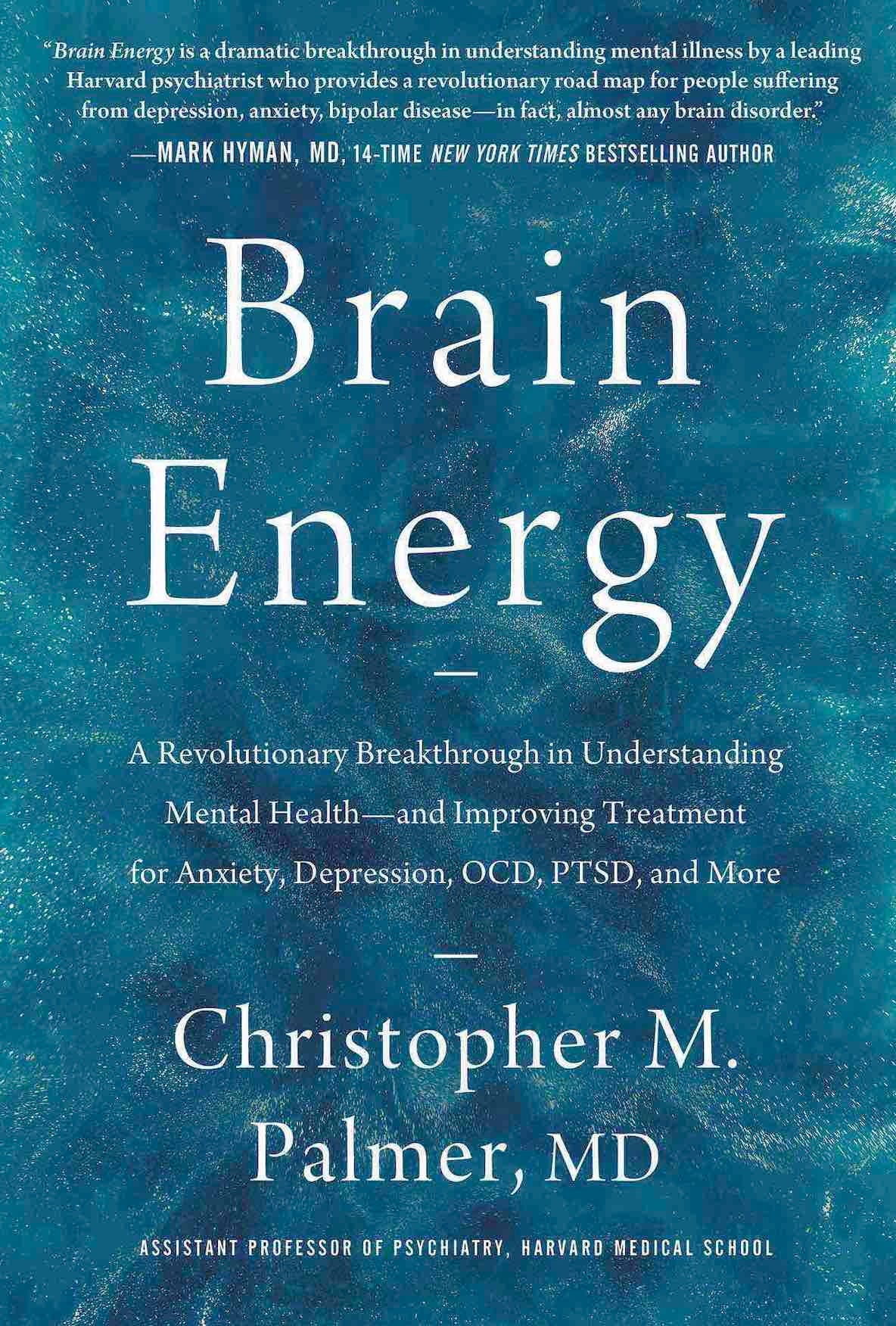
Christopher Palmer, an assistant professor of psychiatry at Harvard Medical School, has written a book examining his research findings that link treatment-resistant mental illness with a variety of metabolic disorders potentially caused by diet and nutrition. Early in the book he lays out his ambitions for the text:
[T]he medical field currently separates mental disorders from other medical disorders. They are viewed as separate categories that have little to nothing to do with each other.
But there are many medical disorders that commonly co-occur with mental disorders and vice versa. Yes—here we go again with bidirectional relationships: Not only do mental disorders have strong bidirectional relationships with one another, many metabolic and neurological disorders also have strong bidirectional relationships with mental disorders. These relationships provide important clues about the nature of the common pathway that will help us solve the puzzle of mental illness.
To explore these relationships, I’m going to focus on three metabolic disorders (obesity, diabetes, cardiovascular disease) and two neurological disorders (Alzheimer’s disease and epilepsy). All five of these conditions are commonly associated with mental symptoms like depression, anxiety, insomnia, and even psychosis. On the flip side, people who have mental disorders are at much higher risk of developing these five medical disorders. Clearly not all people with these medical disorders have a mental illness, and not all people with a mental illness develop any of these medical disorders.
— Brain Energy: A Revolutionary Breakthrough in Understanding Mental Health--and Improving Treatment for Anxiety, Depression, OCD, PTSD, and More, 2022, Christopher M. Palmer MD
What Palmer presents is something of a grand-unified theory of diet, health, and mental health based on the basic premise that the modern western diet messes up human biochemistry at the cellular level. Specifically, that at least some of us experience bundles of symptoms that seem unrelated, yet that also seem to appear in patients simultaneously. Palmer assumes this is not coincidental.
Thus, patients suffering from mental illnesses ranging from depression to alcoholism and Alzheimers frequently present as diabetic or prediabetic, and as often as not suffer from obesity, a common precursor of diabetes and related metabolic ailments. As he tells, prescription drugs that appear to work (albeit occasionally) in alleviating mental illness also affect physical health. Since the exact mechanisms for how pharmaceuticals work are poorly understood, Palmer finds a lot of room for a grand theory.
As we remember from school biology class, the mitochondria are the energy factories within our cells. We learn that they are even more independent entities than previously thought, reproducing on their own within all the cells of the body. Their numbers within the cells and within different tissues vary over time, apparently driven by the body’s chemical signals reporting its energy needs. When we are young and growing or when we exercise, the mitochondria increase in number in response to the added demand for energy. In our nerve cells, the mitochondria multiply and move closer to the synapses that make our nervous system work.
One aspect of Palmer’s argument is that the food we consume has subtle but profound effects on these mitochondria and the biochemical energy they produce. At least for a subset of the human population, the modern diet that is high in carbohydrates (glucose and related sugars) essentially starves the mitochondria, putting constraints on proper bodily function all the way down at the sub-cellular level. This malfunctioning biochemistry in the brain can lead to psychological disorders.
Overall, the book is more general than it is technical. The reader doesn’t need a background in medicine or biology, much less biochemistry. Some background in basic psychiatry might be helpful, but it also isn’t a requirement. As such, the book is meant for a general audience.
There were times where it felt as if the text could have been condensed somewhat. But the book did not leave the impression of a long essay that was expanded a book-length format, as some seem. Palmer was being appropriately thorough.
Anyone interested in the intersecting fields of psychiatry and physiology should find the book interesting, since it presents a grand-unified theory of body and mind. Based on the works cited in the notes, it could have been much more technical, written for an expert audience rather than a general readership. While it is not as entertaining a treatment of the subject matter as popular non-fiction author might have written, it is nevertheless an impressive overview of a very complex subject.
For anyone interested in an interview with the author about the book, he spoke with Tim Ferris on YouTube here:
Good morning. I'm not a big fan of Grand Unified Theories, unless they're my own. However, at the most basic level of this topic, the brain is a bodily organ, just as the liver or kidneys are, and the idea that general bodily health is related to mental health is pretty obvious.
Today’s special animal friend is Matschie's tree-kangaroo (Dendrolagus matschiei), a marsupial endemic to the Huon Peninsula of New Guinea, which is in the nation of Papua New Guinea rather than the province of Papua, Indonesia. These cute, arboreal animals are 20 to 32 inches high (plus a tail) and weigh up to 25 lbs. Males are larger than females.
https://en.wikipedia.org/wiki/Matschie%27s_tree-kangaroo#/media/File:Dendrolagus_matschiei.jpg
Matschie’s tree kangaroos’ habitat is mountainous and heavily forested. They are found at altitudes from 3,000 to 11,000 feet, and often up to 100 feet up in the tree canopy. They eat leaves from pretty much any plant with leaves, and maybe some fruit and flowers as well. They will eat meat and root vegetables in captivity. They typically spend two hours per day eating and the remainder of their time resting and digesting their high-fiber meals.
They are solitary; males and females meet only to mate, which can occur any time of year. These animals have the longest gestation period of any known marsupial, up to 45 days. As with other marsupials, the very immature joey moves into its mother’s pouch to complete its development. It emerges after 8 to 10 months but may nurse for an additional couple of months before moving on to its solitary life.
https://www.youtube.com/watch?v=4ws4g72nsxw
Matschie’s tree kangaroos are rated Endangered by IUCN. Habitat loss is the main threat. Logging, oil drilling, and replacement of native forest with oil palm plantations is occurring in many parts of New Guinea. They are also hunted by some native populations.
https://www.youtube.com/watch?v=5Q28omqcpRE
They are successful in captivity, and joeys are often born in zoos:
https://www.youtube.com/watch?v=uRGtkmDYKSY
https://www.youtube.com/watch?v=6f8yp0PBIS4
There are a lot of different tree kangaroo species. They are not cats, but they have a sort of “cat crossed with a koala” affect. You can get a t-shirt, but Tree Kangaroo is not a band.
https://www.redbubble.com/i/t-shirt/Kangaroos-and-Wallabies-by-rohanchak/56069958.QUQES.XYZ